
Dispossession
Nothing is yours. It is to use. It is to share. If you will not share it, you cannot use it. – Ursula K. Le Guin

Somewhere in this dark, windowless room is the duffel bag of clothing, camera bag, laptop computer, cooler, single-cup coffee press, and coffee mug with the garlanded yellow duck painted on the side, a gift from the Easter Bunny my daughter L. left behind two months after her nineteenth birthday, when she moved to this city of roses, rivers, and bridges. And now I am here too, body abuzz with exhaustion in a near-empty apartment in the inner Southeast.
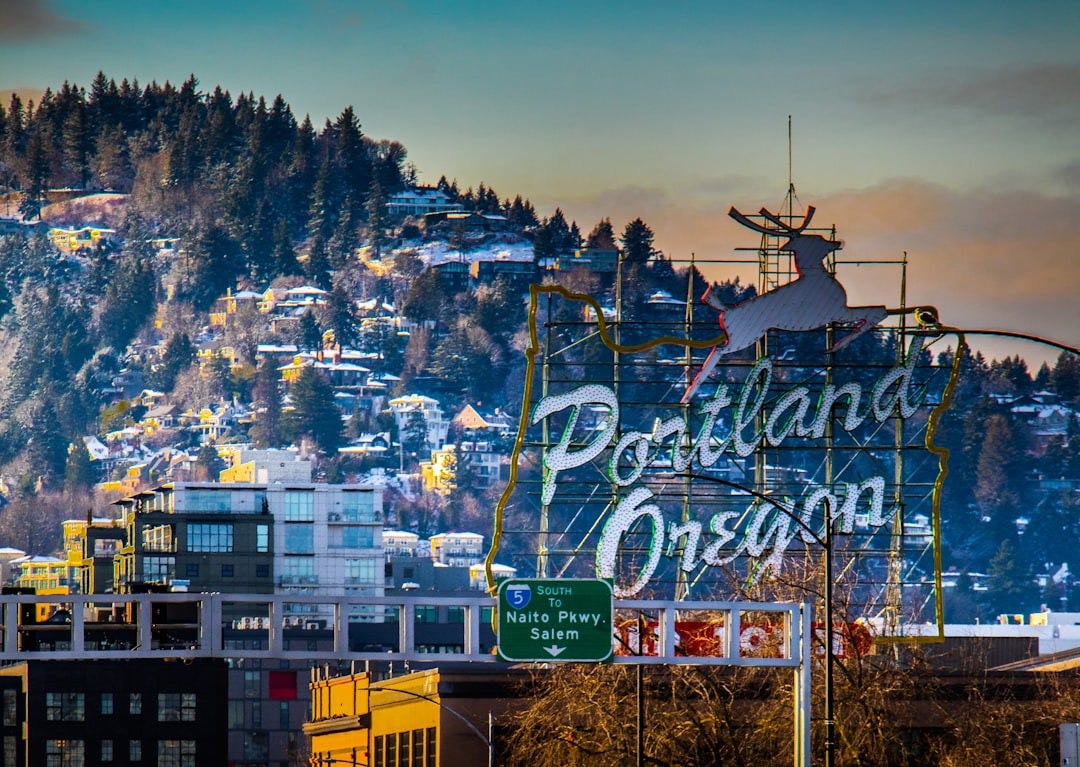
Two new fans whir mightily, but they’re no match for the heatwave gripping Portland. Aside from the new air mattress from Target already leaking underneath me, I arrived furniture-less, on the tail end of a two-month road trip through Arizona, Utah, Idaho, and across Oregon. I had thought I might settle in Tucson not far from my sister and a couple friends who live up in Scottsdale. But summer 2020 proved too much for me. Even the locals complained about the heat. When I mentioned I might look for a rental in Portland, L. was thrilled.
Seeking refuge in things I need, I take a mental tour of the storage unit back in California. Drawn not to the practical things, I notice. Not the box marked “Pots and Pans” or the beautiful, burdensome coffee table with the pedestal fashioned from a World War II-era ship hull. Or the custom-made dining room table that sat eight, ten in a pinch, a wedding gift from my father that was crafted by a very tall friend who must’ve sized the table to his own height. It was always too tall, and somehow the top extended too far from the base of the table, as if its DNA demanded more surface than it should. My dad, bless him, delivered it chair-less.
My then-husband and I spent the next eleven years trying to find the perfect chairs, swapping out cheap ones I found at a garage sale for more expensive ones that never quite fit, and finally, during our separation, I slid into place eight chairs I found on sale at Pier One. The lack of the perfect chairs became something of a joke between us, and for me they remain a painful symbol of our inability to agree on more fundamental matters than furniture.
My inner gaze moves past the wardrobe box of winter coats and what’s left of suit jackets and slacks and dresses from my corporate life; bubble-wrapped mirrors and wall art; and the Radio Flyer wagon that ferried L. to the park and around our suburban neighborhood, a decommissioned air force base in northern Marin County in California. I see her school lesson books, on every page a colored-pencil border of geometric shapes, ivy leaves or some other natural or man-made pattern in accordance with Waldorf education’s precise curriculum, aligned with the child’s brain development.
I open one at random: her seventh-grade chemistry block and a lesson on crystallization. Here her observations of the forces of heat and cold and processes of solubility, super-saturation, and super-cooling are meticulously recorded as instructed. No doubt she was more than half bored copying the teacher’s notes from the ornately bordered chalkboard. I’m left wondering now, again, if the lab portion, picking up beakers and stirring liquids, met her kinesthetic needs. The same kid who troughed her head through her first snow to feel how cold and how soft and absolutely had to touch the prickly cactus to know it was sharp.
She lives a short twenty-minute drive away now. This luxury, after nearly two years apart, most of it during the pandemic. One could more easily grab a young Chinook salmon with her bare hands than capture the right words for it, other than to say time collapsed into something a hair’s width shy of unbearable.
Here they are: three bins of family photographs, an excessive number of images, the mark of an only child, mostly of her first two years. In one bin I dig out a picture I don’t even know I’ve been looking for. She has fallen asleep in her high chair after fashioning herself a hair mask of oatmeal, her chin dropped to the aqua onesie with the tiny, embroidered bunny on the front.
When I visit her two years from now in Chicago, where she will move with her boyfriend N., a rising star comedian, she will come to say goodbye the morning I check out of a bed-and-breakfast. We will eat overnight oats and drink coffee, and over the clatter and rumble of the Blue Line train outside, she will confess she hates the texture of oatmeal, which N. loves for breakfast, because every bite feels the same in her mouth. I will wonder, is she following my lead, accommodating her partner because that’s what one does? And how important is a bowl of oatmeal compared to love?
As I continue this mental tour of the storage unit, the wedding album pulls: a black cover with the date, embossed in gold, and inside the gold-edged pages, I’m certain there are no answers to these questions. Perhaps I’m wrong. One thing is certain, though: not opening is how I protect myself from seeing what was good. The parts that hurt.
In sunny Tucson, under a generous blue sky, four mountain ranges surround saguaro cactus and bufflegrass, an invasive species, I was told. If there is such as condition as “green-deprived,” I had it in the desert and didn’t know it until I got here.
In Portland, moss grows on sidewalks, roof tops, and tree limbs. Paris green, cushiony to the touch, it propagates by neither seed nor flower but from a single spore that requires only rain. I wish I could live in both places. Not like the snowbirds—I mean the Pacific Northwest and the Southwest in one place, year-round. I’ve always wanted two things that can’t exist in the same place, like the pilot-aspiring blond boy that lived in another town and the boy who was too short and lived right next door.
It’s not all green all the time here, however. Fall smolders along the Willamette River when L. and I take a walk on Tilikum Crossing. Portlanders call this the Bridge of the People. Cars are barred from crossing, but pedestrians, cyclists, and the metro train are welcome.
Today I discover my daughter is afraid of driving on bridges, like her late grandmother. “How about walking?” I ask, wondering when this phobia started. Looking doubtfully at the opposite bank, she shakes her head. “Not as scary.” Maybe she fears the bridge will collapse and fail to carry us safely to the other side, or she imagines an abrupt end, a drop-off, as if the engineers abandoned the structure midway through.
My marriage unraveled in the day-to-day weave, threads pulled and loosened by shitty communication, reactivity, attachment wounds, and the persistent aftershock of growing up in families with mental illness and untreated alcoholism.
But even under the healthiest circumstances, once we outgrew our twenties and what his father called the “kittens in a basket” phase, we be,came two people whose temperaments—his rational to my intuitive, my over-control to his laissez-faire, his traditional work ethic to my stubborn insistence on a freelancer-creative life—collided when they should’ve complemented. In spite of trying to work together, we are like magnets with opposite charges. We fought about money, not unusual for a couple, and how to parent a spirited child, also not uncommon. Yet we weren’t just on different pages, but in different playbooks. Not that I read a single parenting book, driven by an inexplicable fear that if I found out I was doing it wrong, that would make me a bad mother.
On either side of the simple grace of white trestles, cyclists pedal or coast. The paths on both sides of the bridge ascend and descend with the contours of the bridge as we walk. L. tells me she’s going to enroll in writing and ceramics classes at Portland Community College. I’m relieved, although I should’ve had faith in her innate curiosity. She got her first library card when she was two. At the local library she pulled on the spines of picture books that grabbed her eye and then read as many as she could on the wagon ride home. She’s reading Cormac McCarthy now. I don’t have the stomach for the edge and hard truths that seem to fuel her generation, so we can’t talk about No Country for Old Men and Blood Meridian, which she tells me are masterpieces.
In the muddy shallows, a tree trunk—long, branchless, and smoothed by the river—catches the afternoon light. “I wish I had my camera,” I say, pointing to the tree. But what I’m actually thinking about—perhaps it’s the leanness of the trunk, the light hitting just so—is the day trip we took in July to Calistoga, before her father moved her, a U-Haul, and two of her best friends up to Portland while I stayed behind packing up the rest of the house.
The day we drove up to Calistoga, HAIM was turned up real loud on the CD player, the late-morning air smelling of California Oak and sunshine. I wanted to give her a chance to talk, give myself a chance to listen and not cry or inflict her with my worry. I turned the music down to ask how she was feeling about her move. She stared out at the oak trees, their branches ancient and lichened, and said, “I guess I’m scared, but I’m excited too.” I think I said something about this being a normal response to leaving home and moving to a new state, and that her father and I loved her and would always be on hand to help when she needed it. I did not tell her my heart was breaking.
As if she’s read my mind, she tents her eyes with the edge of her hand and tells me her dad and I splitting up when she was sixteen came as a shock; we seemed so happy and in love. I take her hand and hold it to my heart, in clumsy acknowledgment of shattering her world.
That day in Calistoga, she lowered her slender body into the tub of hot mud coarse with sticks and minerals. The attendant placed a cold, folded washcloth on her face. Nearby, in my own tub, terror arrived on the backside of questions: Would she be safe? Would she be leaving if her father and I were still intact? Would she ever go to college? And after she’d gone, would I survive sorting and discarding nearly thirty years of life when I had already made eight trips to Goodwill and hired a junk-hauling service twice?
On the way back across the Bridge of the People, she points to the Burnside Bridge, three bridges north. Summer 2020, news reports of protests in downtown Portland had been coming hard and fast. A group of mothers joined hands in support of the protesters who had torched the police station after President Trump dog-whistled for the extremist group, the Proud Boys. I watched the reports from Tucson and felt guilty for not being there, even though I knew I was not that mother. On the phone and over text, I begged her to be careful, hoping she wasn’t going downtown, knowing she was, until one day she told me she stopped going when the Proud Boys showed up. Then, in July, she and her boyfriend and a couple roommates joined thousands of other allies for a “lie-in” tribute to George Floyd. For nine minutes, she lay on her stomach, trembling, a warrior in her own private right with her hands held behind her back.
The next day, she texted me an aerial photograph of the lie-in that was circulating on social media: “I was here, Mom.”
Three states away, worried sick about her and the rest of the world, I didn’t know how to reply. I turn to her now. “I’m so proud of you, honey.” She looks down at the river and squeezes my hand.
An hour later, at her favorite Goodwill store, she helps me pick out bowls, cups, a blue-speckled metal plate she says will be her special plate when she comes over, and a single-cup red tea kettle, electric. “Perfect,” I say.
Treasures appear on my walks with the dog: A blue bottle for cut flowers. An amber-colored bowl with a crack at the base for my earrings. I feel like Benny of The Boxcar Children, cherishing the cracked cup his elder sister Jessie unearthed from a forest dump.
Portland is a freecycling paradise, but there’s plenty of junk around too. Battered mattresses. Lumpy, mildewing area rugs. A vinyl, diarrhea-tan recliner sits for weeks on a curb down the street from my apartment. Someone tags it. Someone else slices a gash into the backrest. One day it’s gone, soon to be replaced by a can of tomato sauce that looks strange and small and singular until one day it’s gone too.
In the frenzy to fix myself and the marriage, a voice, sometimes quiet and more often screaming, said, “I don’t want to be married anymore.” Meanwhile, his midlife crisis showed up as a red motorcycle, which mostly stayed in the garage. I journaled. I prayed to be a better partner. I entered perimenopause. L. entered high school. She was struggling academically and socially. My dad died suddenly of a heart attack.
On the OfferUp app L. has told me about, I purchase a set of silverware for ten dollars from a newly married couple. The husband meets me outside of their townhouse in southwest Portland. As he hands me the heavy brown sack, he explains they received a nicer set from their wedding registry. I flash on the photograph of me and my new husband sitting on the brand-new carpet in the master bedroom. In the kitchen downstairs, glasses and cups and plates and silver are unpacked and placed in drawers and cabinets. I see us: smiling, tired, proud owners of our first home and as-yet unaware I was six weeks pregnant.
Driving back to my apartment on the other side of the Willamette River, envy eases into a furtive understanding of the limitations of until death do us part. Father Bradley, the Episcopalian priest who counseled and married us, made a point of letting us know that “death” was not always literal. He and his former wife had grown apart over the years. A symbolic death, he explained. Was he giving us an out or merely setting our expectations for what might come to pass?
When I walked down the aisle, a sob erupted inside of me and sounded throughout the candlelit sanctuary. It is mortifying to hear the sob in my memory now. I didn’t consciously register why I felt such emotion, although my soul must’ve known the enormity of marriage. Maybe it also saw twenty-some years ahead, into a no-woman’s-land of irreconcilability and singlehood.
On another day, a young woman with green-tinted eyebrows who used to load gear onto pack mules at a teenage wilderness camp helps me load a lightweight dusty sofa, whose color isn’t quite navy but also not dark gray, into the back of my RAV4. She secures the hatch with rope and elegant knots.
While I admire her skill, I worry I’ll be unable to loosen them. But I manage, sliding the sofa out of the car, setting it on the sidewalk outside my apartment building, and looking around for an able-bodied recruit. One side of my brain chastises, “You should have thought this through.” The other side says, “Trust. Someone will come along.” It is a familiar mental tussle, and in the middle of this volley is little old me, or new me, or some me, waiting to see what happens next and cheering me on. The sofa slides easily into the apartment building and, turned upright onto one arm, onto the elevator, with just enough space left for me.
It is Thanksgiving. Last year, I spent the day alone and ate Chinese takeout in the Tucson bungalow I had rented sight-unseen before I left California for good. My daughter visited once, when she flew out from Portland for a short visit in March 2020. She had a nasty cough and slept most of the time, likely an early case of COVID, before most of the world recognized it. She started feeling better and we went to get tattoos, my first—a bird on a branch, which she drew on a napkin and gave to the tattooist—and her eighth or ninth, or is it tenth?
“How much is this going to hurt?” I asked her, staring at the inked needle inches from my left hip. “Just breathe into it, Mom,” she said.

Tonight I have brought marinated chicken breasts. L., N., the roommates, and other guests provide the rest of the Thanksgiving feast: a soupy but yummy potato au gratin, broccolini, and flammkuchen, a German-style pizza two young women who grew up in Germany bring because it reminds them of their childhood. There are specialty cheeses, fig spread, goat cheese, and slices of fresh, seeded baguette. Plates are filled.
We sit around a coffee table in the living room, on the sofa, a settee, on the floor. The comedians talk shop. A heated debate about who is and isn’t funny in the Portland comedy scene and what does and doesn’t constitute irony ensues. I fail to keep up.
Irony is their medicine and their opinions move at the speed of TikTok and cancel culture. The conversation morphs into a debate over what’s worse, the German Holocausor the systematic slaughter and erasure of indigenous people in North America. The German girls vote the latter.
Quincy, the one-year-old resident Great Dane, tries to engage my seven-year-old black lab in play. Overwhelmed by the enthusiasm of a dog twice his size, Jasper cowers against my legs. He looks up at me every so often, in his burnt sienna eyes two questions: “What is this creature? Can we please go home?”
The German girls invite him up on the settee and spend the rest of the evening fawning over him. In the company of half a dozen young people at least half my age, I’m happier than I have been in ages. A plan is made for Christmas. Calling forth a childhood staple, L. will make spinach lasagna. I promise to bring garlic bread and beverages. “Maybe it’ll snow,” she adds, and kisses my cheek.
It rains. It rains some more.
The trees drop their leaves by the millions: electric yellow. Smoky orange. Veins of green, then brown, surrender to desiccation. On wet walks Jasper tries to reconcile these new smells of decay with the lackluster scents of a California autumn and a fall that does not exist in Tucson. One morning his insatiable lab nose peruses a box of retired Christmas decorations and ornaments. I consider the tree stand, briefly; it’s missing a screw and unlikely to hold a live spruce upright.
In storage, among two decades’ worth of ornaments: the ceramic red cardinal with the gold glitter collar; the dense and shimmery emerald-green ball; the large, hollow Santa Claus head from Macy’s on Union Square, our first purchased ornaments as a married couple; the handmade painted-dough wreathes and snowmen, God’s eyes, and construction paper stars; the sheep’s wool lambs and tin angels; and the Scottie dog and mouse on skis from when her father was a boy. All waiting for a tree in the future. Like the wedding dress, a mermaid silhouette covered in crocheted lace petals, which L. made me promise to keep, just in case.
The bed-in-a-box arrives from Amazon and takes two days to fully inflate, but finally the air mattress goes into its stuffy bag. I sleep well enough most nights. One night I decide a thing about things: They are practical and necessary. They’re proxies for memory and time. And like found, cracked amber bowls, they are objects of vulnerability and impermanence. Sometimes one thing is all of these things and that’s why it is so hard to let go.
In one of our last couple’s counseling sessions, my husband said, “I release you.” The therapist—a brisk, smartly dressed Austrian woman—looked disappointed in me. I stared at her dachshund, curled up on his floor cushion with one eye open, and felt like a failure.
The Christmas potluck is canceled. One of the roommates has COVID and sequesters in his room with the Great Dane. Early afternoon, L. and I snuggle under blankets on the porch sofa, warming our hands around cups of hot coffee. A pre-decorated tree from Trader Joe’s sits on a ledge amid a clutter of ashtrays and cigarette butts.
It’s supposed to snow.
N. joins us. He’s shy about receiving gifts but seems to like the burgundy Merino wool sweater I ordered from Macy’s, to which L. gave a thumb’s up. The beautiful brown mohair sweater for me, which she has duct-taped and wrapped in a box that held throwaway N-90 face masks, makes me tear up. A moment shot through with pain, joy, and relief.
“I love to make you cry, Mom, in a good way,” she says, holding the glass music box up to her ear. The tiny-teethed gold cylinder turns as it plays “You Are My Sunshine,” which I sang badly, sandwiched between “Hush Little Baby.” Over and over and over I sang, until finally she fell asleep.
In May I will visit California for the first time since I left. I will not, as I ambitiously hoped, empty the storage unit and turn in the key. I will fetch a wall clock shaped like a French coffee pot, which ticks most audibly at night, and a small mirror with a silver-painted wood frame of suns and crescent moons that hung in the kitchen. The things I missed that don’t hurt.
My clothing, save a couple of coats and a pair of black boots that my feet have outgrown but I swear a good cobbler could stretch, all but two of L.’s lesson books, most of the kitchenware and bedding, and all furniture except the dining room table will go. A few choice pieces of L.’s art from high school, a box of her own memories, and the Christmas ornaments will stay in storage. The personal organizer I will hire, for moral support as much as her skills of toss-donate-recycle-or-keep, will glue a couple mementos from the toss pile to the crazy art car, brainchild of the COVID shutdown, before we both drive off with vehicles packed seat-to-ceiling with Goodwill donations.
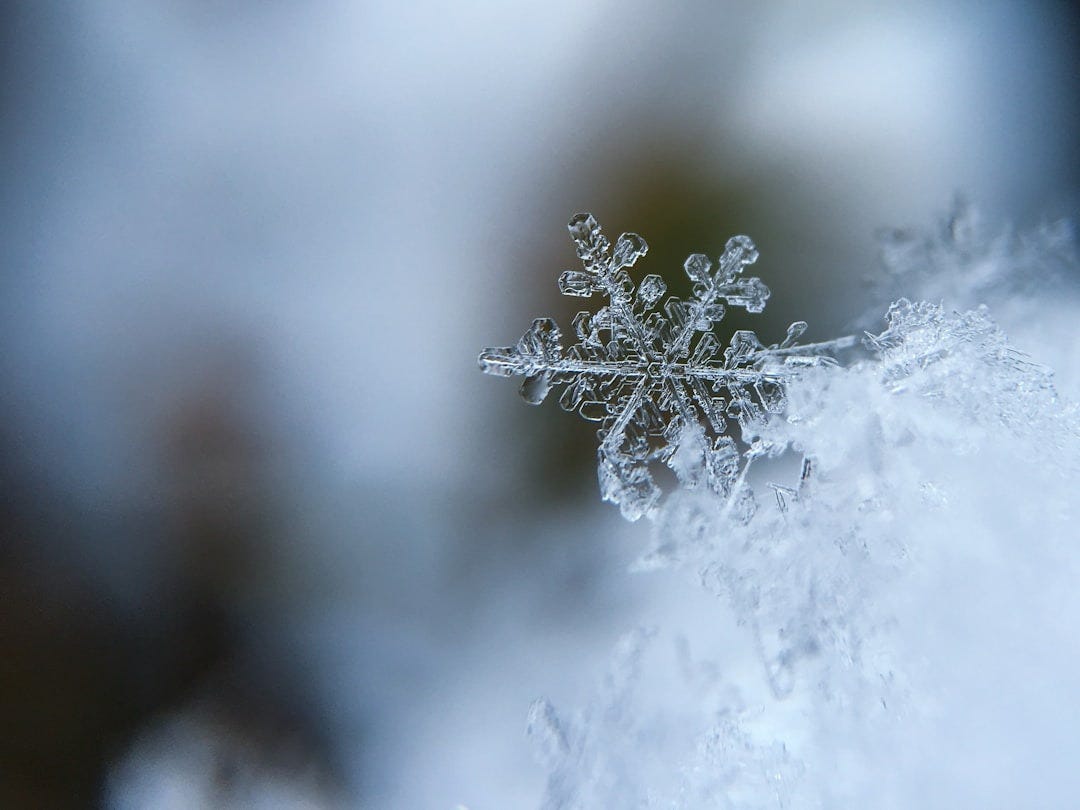
The cold Christmas afternoon in Portland bites. We wait and wait, but the snow is not forthcoming, and when we can no longer feel our faces, we say our goodbyes. I wonder, not for the first time, how L. learned to hug. Neither her father nor I hug like this: fierce, tender, present, and with no thought of letting go.
Just after midnight, it finally snows. The dog is barking in his sleep. His paws twitch, then curl, in pursuit of squirrels he’s never chased awake. After a brief debate with myself about dragging the mattress into the living room, I decide it’s not worth the trouble.
I’ve seen snow three times before: In a village on the French-Swiss border, with my feet jammed into a pair of borrowed ski boots. On the bunny slopes in Lake Tahoe, where I fell down again and again. And from inside a 1924 bungalow in Tucson, where snow is a rarity on par with summer temperatures below one hundred, and I thought I might stay.
This snow, here, is something else: flurries like velvet. No, glass. Crystals inside a bigger life, adrift in the streetlight.
This essay first appeared in Calyx: A Journal of Art and Literature by Women. Vol. 34:3.Summer/Fall 2024.
This is wonderful Lee, a joy to read, very touching.